Tuesday, 26 November 2013

Research and Planning: Film Genres.

Films are given genres so people have an idea/expectation of what the story plot may contain. Genres also help categorise films so it easier to find a specific type of film that you want to watch.

Common Genres:
- Horror
-Romance
- Comedy
- Thriller
- Fantasy
- Documentary
- Teen
- Western
-War
-Action/Adventure
-Crime
- Sci-fi
Some films can consist of more than just one genre, for example a Rom-com(a combination of romance and comedy). An example of a rom com is 'Valentine's Day'.


Each different genre has it's conventions.
For example, the stereotypical conventions in a horror movie are :
- The setting is dull (reflects negativity)
- Story plots can involve hauntings and demonic possession presented in the film 'The Conjuring'. Story plots can also involve mindless killing in films such as 'Saw'.
- In a horror genre movie, you would expect the film to be frightening, unexpected, creepy, mysterious and jumpy perhaps.
- In horror movies you would always expect there to be a specific victim or group of victims that are usually targeted on by evil character(s) such as demons or monsters for example.
- In terms of film certification, horror movies are generally classified as 15 or 18 because the content is too inappropriate and overwhelming for younger audiences.
- In terms of camera shots and editing, the shots are short and jumpy to create a dramatic effect and  suspension.
- Music is usually dramatic and creepy

This image is from the horror film 'The Conjuring'. This image shows the setting of the film, as we can see it is very mysterious and threatening which are typical conventions of a horror genre movie.

Looking in to film genres has made me think about what genre I would like my own film opening to be. Out of all genres that I have researched, horror and crime appealed to me the most and hopefully I can apply the conventions of these genres in to my film opening once I have planned everything.

Monday, 25 November 2013

Research and Planning: Film Certification

Age Ratings
These age ratings are from http://www.bbfc.co.uk/. I researched these to give myself an idea of who my target audience will be for my film opening. The age rating guidelines are put in place to stop young children from viewing things that would be inappropriate to them and that may cause psychological issues.

Each age guideline has different aspects. For example a U film won't contain any swearing what so ever or any explicit scenes of violence or sexual activity. On the other hand, a 15 rated film will contain things such as strong violence, use of bad swear words and sexual activity. If there were no age ratings, anyone under the age of 18 could watch anything unsuitable which can cause all kinds of problems.

Research and Planning:Thoughts on the main task brief.

Task: The titles and opening of a new fiction film, to last a maximum of two minutes.
My thoughts on the task is that I know that research, planning and preparation for filming this opening will require a lot of work. I will begin by brainstorming some idea's I think off and once I have developed a structured idea, I will begin looking in to aspects such as location, make-up/costume and which things will need to be in or out of the mise en scene. Overall, I am excited about this task and hope to produce a professional opening sequence scene to a film. 

Monday, 18 November 2013

Research: Film Openings

Se7en
-Bedroom scene: Establishing shot/wide shot of bedroom
-Diagetic sound of ticking noise and off screen sounds within the film. The off screen sounds are fairly noisy which could suggest that this man lives in a city. Some of the noise is sirens which could also suggest crime(genre).
-The lighting is dark and the curtains are closed which suggests that it is night time. This is mysterious and the man on the bed seems vulnerable due to the lighting. 
-The lighting could possibly foreshadow an upcoming bad event
-The shot is filmed in the door frame of the bedroom (POV shot). This gives the feeling that someone is watching him and intruding in on his space. 
-The mise en scene links to the mans age and interests. The furniture looks basic and old, which could reflect his age. He also has a bookshelf with a lot of books which could suggests that he is a sophisticated, well educated man.

The Great Gatsby (2013) first opening 2 minutes
- The film begins with old fashioned music which instantly gives the audience an idea of which period the film is set in. However, it is uncertain so far on what the exact genre it is, whether it be romantic, tragic, drama etc.
-The first thing we see is a flashing green light surrounded in darkness. This is mysterious. The camera shot is zooming in on this green light and gradually we are able to see that there is a lake in between the camera and the light and that there are buildings where the light is coming from. The fact that the camera is zooming in on this light and the buildings is like inviting the audience to find out what is going on.
- There is a narration that begins, we don't know who it is though yet due to the camera shot still focusing on the flashing green light
- Suddenly it begins to snow, this is showing a time change. The light is still flashing though, suggesting that it always flashes no matter what.
-There is a theme of light and darkness because the darkness suddenly changes to light. This could foreshadow upcoming events.
-The camera shot switches to Nick and is a close up shot of him talking and the audience now know that he is the narrator.
-The non-diagetic music is mysterious and almost seems to reflect sadness.


Monday, 21 October 2013

Preliminary Task Evaluation.

The camera which we used to film our preliminary task 
The brief that we were given for our task was simple and we had to make our own story line . As well as creating a basic story line, we had to include three important types of camera movement/angles. These were match on action, the 180 degree rule and shot reverse shot. Adapting these elements in to our preliminary task was not as straight forward as it seemed, but eventually we figured out how to do it.

In terms of planning, our group was fairly organised in ensuring that we had all props and costume ready in order to film. We filmed our preliminary task in our own time and we made sure that we had recorded all footage that we needed before the deadline. As a group we came up with  idea's together and brainstormed them on to paper. However, our idea's were too complex for the task  we had been set so we had to change our ideas quickly to something more simple- an interview. We created a script for the scene of dialogue in order to know what to exactly say for the scene.

Our storyboard was not very effective in terms of helping us with the filming. This was because the storyboard did not match up to the way we ended up filming. So, what we did was create the storyboard after we had filmed the footage so we knew exactly what to draw and write on to our storyboard.

The camera was easy to use once we had figured out how to use it. In order to create steady shots we used the tripod for certain parts of the filming, however most of the shots were filmed without the tripod. We could have used the microphone for filming the dialogue scene to have created a clearer sound.

Whilst filming, we did not come up with many problems. The only problem was that the room which we filmed the interview in was extremely small so it was difficult to film properly. To overcome this we had to re arrange the chairs and other furniture in the room.
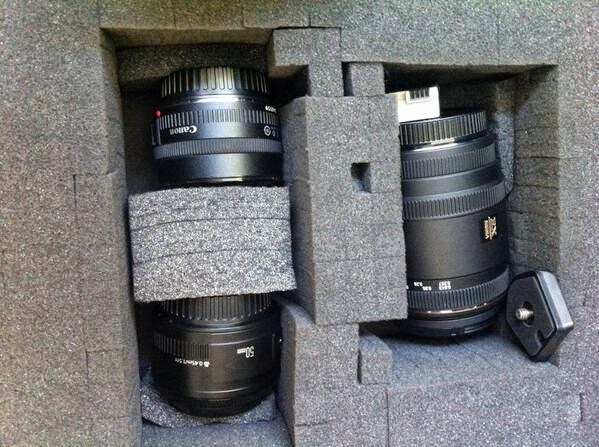
The different camera lenses

From using the Apple Macs Final Cut Pro for editing our film, I learnt that creating a continuous fragment of film takes a lot of editing, cutting and a lot of time. Every lesson we worked on a specific part of our footage. I learnt how to insert transitions where appropriate in our film, we used dissolve and a blackout frame. We used transitions to create more effect in our film and to make the most of the editing software. Final Cut Pro allowed us to remove certain sounds that we didn't want in our footage and then we were able to overlap the visual footage that we used on to the sound that we did want. Something that I struggled with, was making some cuts able to flow but eventually I figured it out. We needed to 'shrink time' in our film, so in order to do that, we added a fade effect to show the passing of time. We did this to ensure that our film did not drag on too much. I found that it is better to have a short perfected film rather than a long, poorly edited film.

Editing on the Apple Macs- Final Cut Pro
Overall, on a scale of 1-10, I am a 7 in terms of happiness of the finished product. I think that the most effective shots are the shots which build up to the interview: showing the feet walking to the interview. This is because it will add curiosity to audiences as to what is happening, where is she going? why can't we see her face? who is she? Also, the shot reverse shot scene was effective because it just flowed so well and it is clear that two people are having a conversation with each other.

If I were to do this task again, I would have spent more time in planning everything out exactly how I want it to be in order to save time in the long run and therefore film effectively in the way I intended. I would also spend more time editing the film, like staying after schools or lunchtimes if needed. I would also make sure I have lots of footage to work with so it is not so difficult to cut and I wouldn't be wasting time by re filming parts.

I think that our group worked quite well together as a whole particularly in planning and organisation. In the team, I acted in the film yet did not film anything and I helped edit the film. At the beginning we all contributed our ideas and then decided as a group what we wanted for our film. We managed our time well and ensured that we met up outside of lesson time to film and discuss anything that we needed to go over.